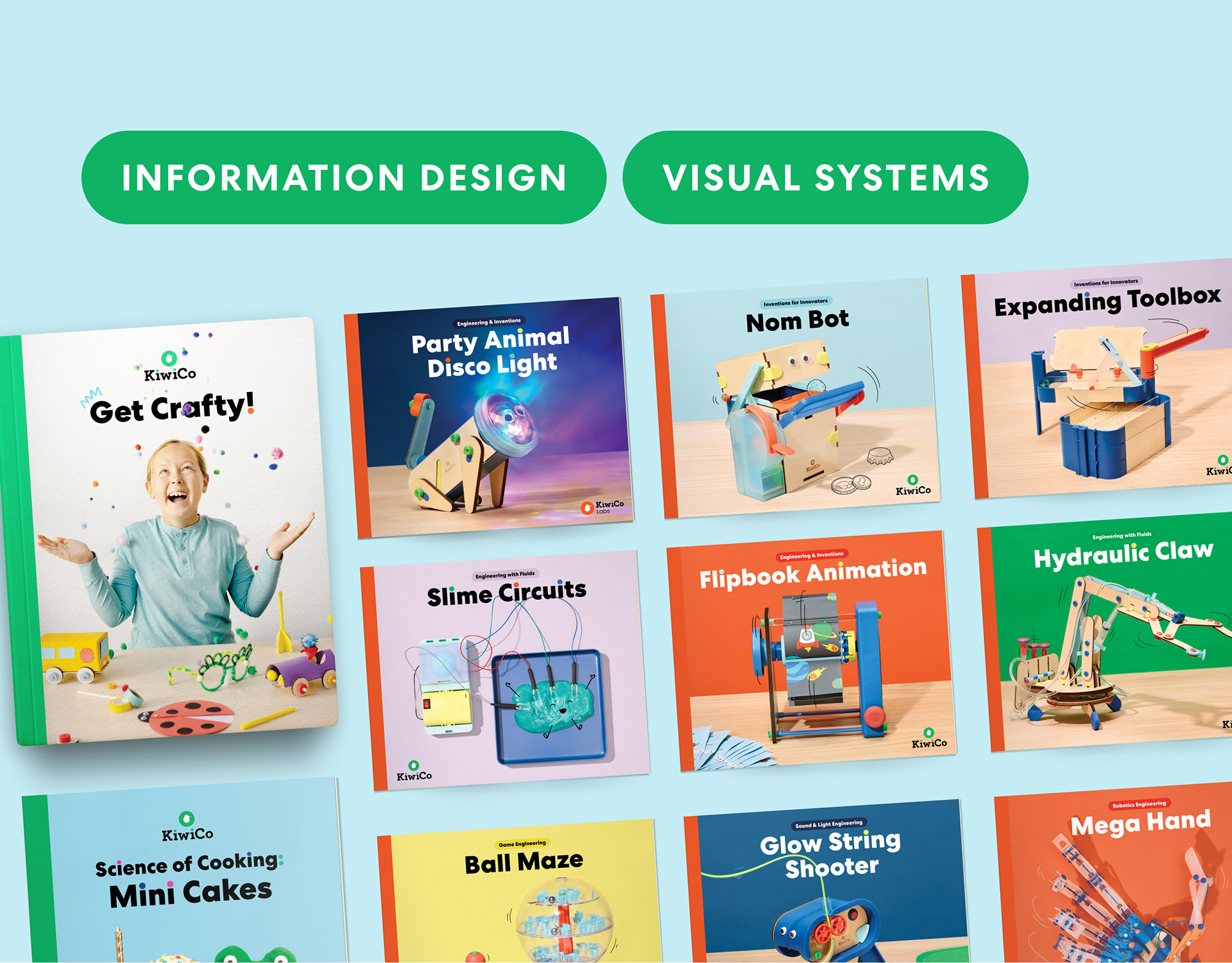
Context
Most of what I do is take something technical – a chemistry experiment, DIY activity, multi-step build, cookbook for kids – and turn it into something a child can follow alone, no adult required. My work spans our most popular subscription line, high-visibility seasonal releases, wholesale product, and specialty goods. I work closely with editors, illustrators, photographers, product designers, and sourcing specialists to make it happen.
Process
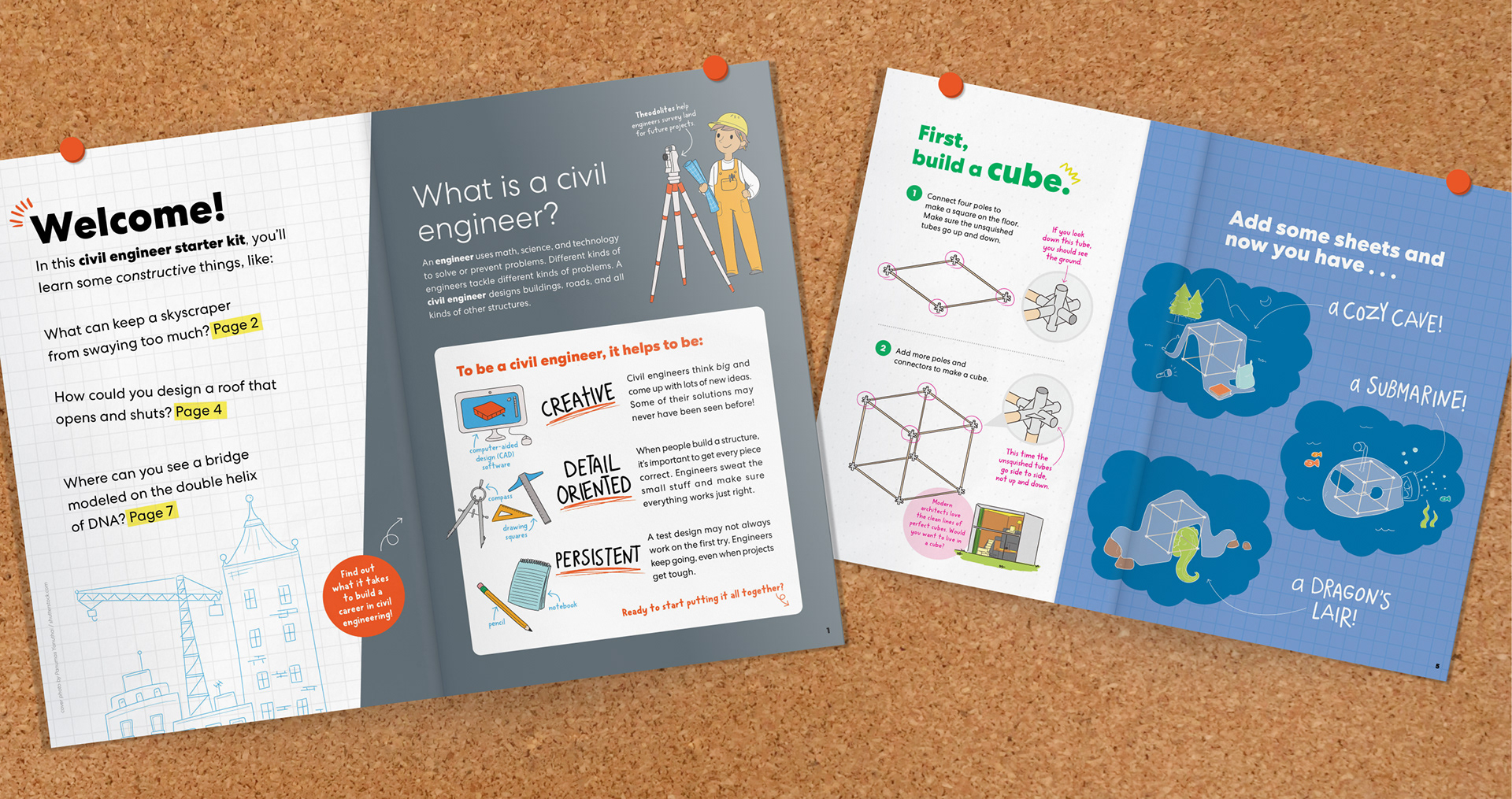
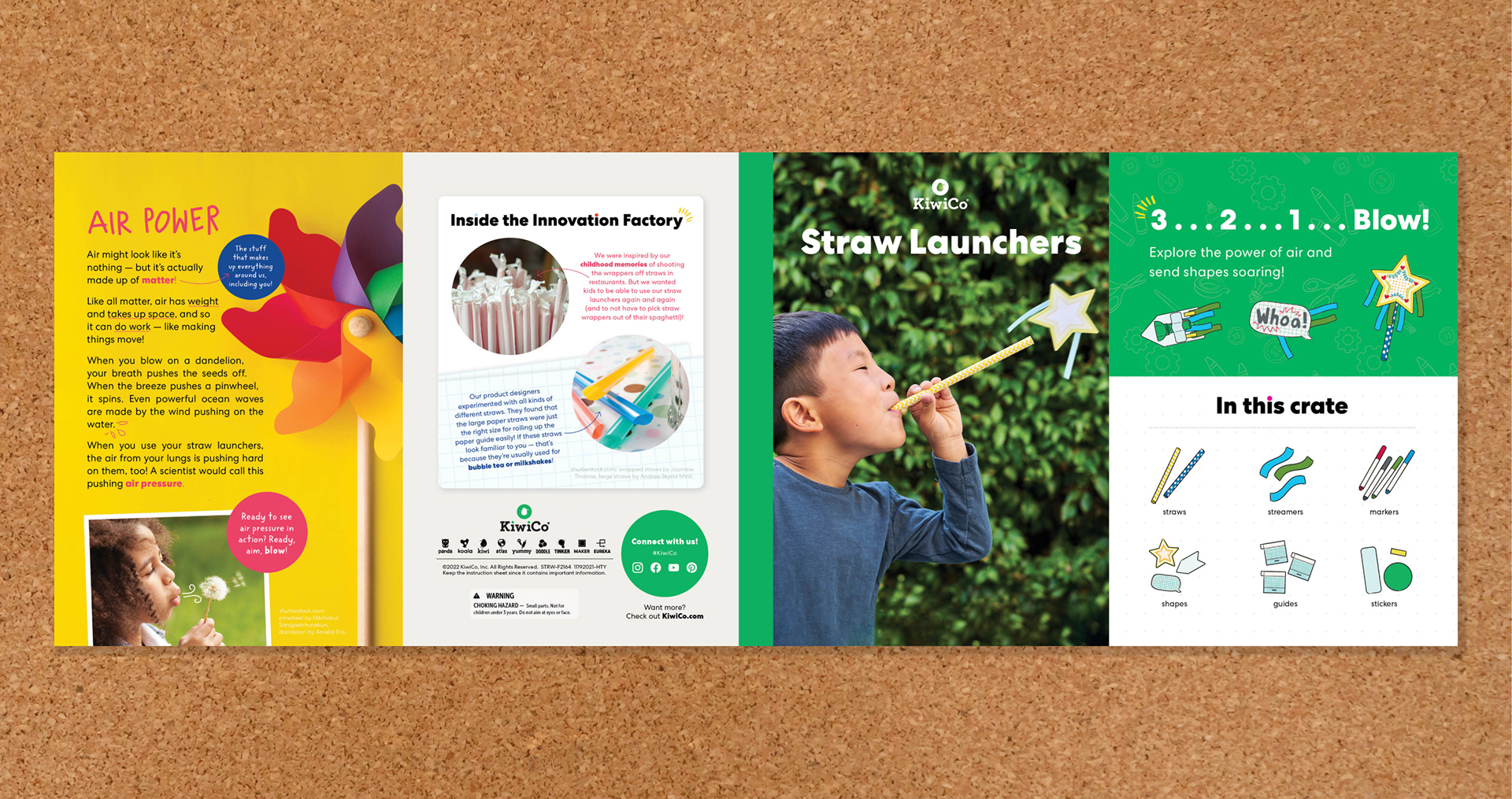
My work starts with how a product looks and functions: play patterns, what can be simplified to make it buildable, how it reads against our visual design language. From there, I develop whatever art the product needs (recently that's meant designing a circuit board and a sheet of disco stickers) and keep refining the experience through everything that ships in the box – printed collateral, packaging, kitting.
User Testing
We test our products and content with real kids and families, which is as unpredictable as it sounds – a sugar crash or bad mood can fully derail a session. But even a disengaged user tells you something. More often than not, what looks like a kid problem turns out to be a design problem, and the fix often comes from thoughtful adjustments to illustrations or content hierarchy. This stage has shaped how I think about design more than anything else.

What I've Learned
Designing for kids demands precision. There's no second screen, customer support, or site update – if the visual system doesn't hold up on its own, the whole product experience falls apart. That constraint shapes how I think about hierarchy, sequencing, and clarity in general, not just for kids. I test early, simplify as much as possible, and never underestimate the person on the other end of the design.